


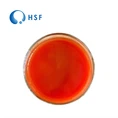



Lycopene is a carotenoid found mainly in vegetables and fruits such as tomatoes and carrots. It can be obtained by extracting from tomatoes or fermenting with Blakeslea trispora. Humans or animals cannot synthesize carotenoids on their own, so they need to obtain lycopene through diet.
 |
 |
Lycopene absorption process
The absorption process of lycopene in the human body mainly goes through three stages, including release from the food matrix, dissolution into fat particles, and micellization.
In the oral and gastric digestion stage, the release of lycopene and fat is mainly promoted by chewing, enzymatic digestion of carbohydrates such as starch, and a small amount of fat (less than 10%). The released lycopene dissolves in fat particles and forms emulsified fat through the peristalsis of the stomach. After entering the duodenum, due to the action of bile salts, the emulsified fat particles are reduced, the fat is digested by lipase, and the lycopene is released. The released lycopene, bile salts, and cholesterol formed by digestion will form micellar particles.
Studies have shown that long-chain triglycerides can more effectively promote the formation of micellar particles than medium-chain and short-chain triglycerides. Only micellar lycopene can bind to the transport protein SR-B1 and be absorbed by the small intestinal epithelial cells, and thus be used by the human body. The release of lycopene from chromoplasts, the emulsification of lycopene dependent on fat, and the formation of micellar formation are important limiting factors for the bioavailability of lycopene.
Therefore, factors that can improve the efficiency of the absorption stage of lycopene can promote the improvement of the bioavailability of lycopene.

Effects of Lycopene
Lycopene is of great significance in preventing cardiovascular diseases, improving human immunity, and delaying aging.
Lowering blood lipids and blood pressure
To explore the effects of lycopene on blood lipids, researchers from all over the world have conducted several animal and human trials. Australian scientists collected 12 international studies on the effects of lycopene on blood lipids and blood pressure and found that human supplementation with lycopene can inhibit the formation of low-density lipoprotein cholesterol oxidation products, prevent the occurrence of coronary heart disease, and play a positive role in the control of blood lipids and blood pressure.
A study by Cambridge University announced at the annual meeting of the American Heart Association found that the artificial lycopene Ateronon newly developed by scientists has unique effects in improving vascular elasticity and reducing vascular sclerosis.
Protecting the skin
Studies have found that lycopene can delay aging by scavenging free radicals, enhancing the activity of superoxide dismutase and glutathione peroxidase, and reducing the content of malondialdehyde.
The antioxidant effect of lycopene enables it to prevent and delay skin aging, reduce wrinkles and freckles, and whiten the skin.
Anti-inflammatory effect
Clinical studies have found that lycopene has a significant effect in inhibiting the production of pro-inflammatory cytokines. Supplementing 7 mg/d of lycopene for 30 days in patients with coronary artery disease can effectively reduce the IgG content in the body.
Li found that healthy young women who supplemented tomato juice containing 32.5 mg of lycopene every day for 8 weeks had anti-obesity, antioxidant, and anti-inflammatory effects.
 |
 |
Lycopene market
Lycopene has been recognized as a Class A nutrient by the Food and Agriculture Organization of the United Nations (FAO), the Joint Committee on Food Additives (JECFA), and the World Health Organization (WHO). It is widely used in food as a food additive in more than 50 countries and regions and has both nutritional and coloring effects.
The global database shows that the release trend of new products containing lycopene in the global food, beverage, and healthcare categories from 2019 to 2023 is on a downward trend from 2019 to 2021, and the trend of new product launches from 2021 to 2023 is rapidly rising, proving that lycopene has been well applied in the past three years and has a large demand.
As the application scale of lycopene in food gradually expands, the application categories in the food field are more abundant, and the application requirements of lycopene and its processed foods at home and abroad are gradually clarified, lycopene has a good development prospect.

HSF Biotech's fermentation Lycopene
- Lycopene OS- The oil suspensions of lycopene
- Lycopene CWS/CWD-The spry-dried water-dispersible powder
|
|
|


At HSF, we take pride in our state-of-the-art R&D center and production base equipped with cutting-edge technology. With multiple patents and certificates, including quality system certifications, we guarantee the highest standards of quality and safety. Our commitment to excellence extends to our customized products and integrated service solutions, ensuring fast delivery and tight packaging. For inquiries or to request a sample of our premium lycopene powder and lycopene oil, please contact us at:
Email: sales@healthfulbio.com
Whatsapp: +86 18992720900