


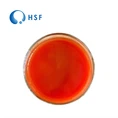



 In 1959, American medical experts (Emster) first reported that lycopene has an anticancer effect. The superior physiological function and anti-cancer effect of lycopene have been recognized by the Food and Agriculture Organization of the United Nations (FAO), the Committee on Food Additives (JECFA) and the World Health Organization (WHO) as a type A nutrient, thus becoming the leading health care product in the 21st century. It has a wide range of application prospects in the fields of medicine and health care, food additives, cosmetics, food coloring and so on.
5 Functions of Lycopene
1. Anticancer effect
The level of lycopene in blood is negatively correlated with the incidence of prostate cancer, digestive tract cancer (esophagus, stomach, colon, rectum), cervical cancer, breast cancer, pancreatic cancer, bladder cancer, skin cancer.
2. Antioxidant and anti-aging effects
The antioxidant effects of carotenoids include quenching singlet oxygen, eliminating free radicals, and synergistic antioxidant effects with other oxidants. Lycopene also has this physiological function, and its ability to quench singlet oxygen is the strongest.
3. Safe lipid-lowering and hypoglycemic effect
Lycopene is a fat-soluble substance and has a strong adsorption effect on lipid substances. It can crush macromolecular fat substances, promote their rapid biological oxidation, consume excess fat in the body, remove lipid substances in the blood vessel wall, and eliminate obesity.
4. Biological effects on other diseases
Studies have reported that the concentration of lycopene in the blood of HIV-positive women and HIV-infected newborns is lower than normal. Lycopene can also play a protective effect on radiation. With lethal doses of irradiated mice, the survival rate of mice fed with lycopene was significantly increased. Lycopene has protective effects on DNA damage in lymphocytes and hepatocytes.
5. Natural color rendering ability
Lycopene is the main pigment that determines the color of ripe tomatoes. Its deep red color is determined by its crystal state. Because it has various biological functions, it can be used as a natural pigment for food. Lycopene is widely added to various foods to improve the sensory properties of foods.