


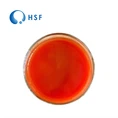

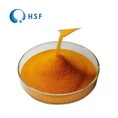
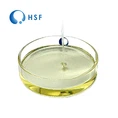
Soy lecithin, also known as soybean yolk, is a by-product of the refined soybean oil process. It is obtained by solvent extraction, centrifugal separation, and alcohol washing.

Soy lecithin is the main product of oil foot after oil processing, mainly lecithin, cephalin, and inositol phospholipids. Lecithin accounts for about 29% of soybean lecithin, cephalin accounts for about 31%, and inositol phospholipids account for about 40%.
Physical and chemical properties and characteristics
Light yellow to brown transparent or translucent viscous liquid or white to light brown powder or granules, with a weak specific gas Lecithin is a hygroscopic waxy solid that swells in water to form a colloidal liquid.
Soy lecithin has a strong emulsifying effect. Lecithin contains many unsaturated fatty acids, which are easily affected by light, air, and temperature and deteriorate, causing the color to change from white to yellow and finally to brown. Soy lecithin can form liquid crystals when heated and damp.
|
|
|


With the deepening of lecithin research and improving people's living standards, soybean lecithin will be increasingly valued and used.
Soybean lecithin is an excellent natural emulsifier and surfactant. It is non-toxic, non-irritating, easily degradable, and has multiple functions. It is widely used in food, medicine, cosmetics, and feed processing.
Efficacy and effects of soy lecithin
1. Emulsifier
Soy lecithin is an excellent emulsifier. It can make the oil-water mixture more evenly dispersed together and stabilize the form of the emulsion. In food processing, soy lecithin is often used as an emulsifier, such as in the production of chocolate, soy sauce, salad dressing, and other products. It can increase the stability and uniformity of the product, making the product smoother and taste better.
2. Fat metabolism
Soy lecithin is rich in unsaturated fatty acids, such as linoleic acid and linolenic acid. These fatty acids help regulate blood lipids, lower cholesterol, and promote fat metabolism. Taking an appropriate amount of soy lecithin can help regulate blood lipid and cholesterol levels and prevent the occurrence of cardiovascular diseases.
3. Prevention and treatment of nervous system diseases
The phosphatidylcholine rich in soy lecithin is an important neurotransmitter that plays an important role in the development and function maintenance of the nervous system. The lack of phosphatidylcholine can lead to dysfunction of the nervous system, and the intake of enough soy lecithin can help maintain the normal function of the nervous system and prevent the occurrence of nervous system diseases.
4. Protect the liver
Soy lecithin also protects the liver. The liver is one of the most important metabolic organs in the human body, and its function is directly related to the health of the human body. The ingredients in soy lecithin can increase the antioxidant capacity of liver cells, reduce the burden on the liver, and improve the liver's detoxification function, thereby protecting liver cells from damage and promoting the repair and regeneration of liver cells.
 |
 |
5. Improve memory
The phosphatidylcholine in soy lecithin helps synthesize acetylcholine in the brain and is one of the important components of human brain cells. Sufficient phosphatidylcholine can improve the transmission speed between neurons, and enhance memory and learning ability. Studies have shown that moderate intake of soy lecithin can improve the cognitive function of the elderly and prevent the occurrence of senile dementia.
6. Antioxidant
Soy lecithin is rich in antioxidants, such as vitamin E. Antioxidants can help remove free radicals in the body, reduce oxidative damage, and delay aging. Moderate intake of soy lecithin can provide antioxidants, help protect cells from free radical damage, and maintain the health of the body.
7. Regulate the immune system
Soy lecithin has a regulatory effect on the immune system. Studies have found that certain ingredients in soy lecithin can enhance the activity of immune cells, promote immune response, and enhance resistance. Appropriate intake of soy lecithin can improve immunity, enhance the body's resistance, and prevent the occurrence of diseases.
8. Promote digestion and absorption
Soy lecithin has the effect of promoting digestion and absorption. It can increase the secretion of gastric juice, improve digestive function, promote food digestion, and increase the absorption rate of nutrients. Appropriate intake of soy lecithin can improve the utilization rate of food, increase the absorption of nutrients, and prevent malnutrition and digestive system diseases.
Application of soybean lecithin in the food industry
The physical and chemical properties of lecithin and its application in food processing have been confirmed by experimental studies. Lecithin has a variety of functional properties, such as emulsification, splash prevention, instant dissolution, wetting, dispersion, demolding, viscosity improvement, foaming, crystallization control, protein and nutrient binding, etc., and has a wide range of uses in the field of food processing. At the same time, because lecithin has the effects of lowering cholesterol, preventing arteriosclerosis, protecting the liver, and strengthening the brain, it can be used in the development of new healthy foods.
- Margarine and shortening. Lecithin is the most commonly used splash prevention agent and emulsifier in the production of margarine and shortening. Its dosage is generally 0.1% to 0.5% of fat. It is usually mixed with monoglyceride or diglyceride. It can prevent water seepage and splash prevention, promote browning during the drying process, enhance the shortening effect, and strengthen the antioxidant properties of VA in cream.
- Chocolate, caramel, and coating lecithin have re-emulsification, anti-adhesion, release, and viscosity adjustment capabilities, which have an important impact on the performance of candy products and can control viscosity, reduce stickiness, and control crystallization. Lecithin used in chocolate can improve the softness and brittleness of chocolate, reduce viscosity, and prevent surface blooming.
- Instant Foods. Lecithin is a good emulsifier, wetting agent, and solubilizer. Lecithin can increase the affinity between the solid and liquid interface and quickly hydrate powder food particles. Adding an appropriate amount of lecithin in the production process of cocoa powder, breakfast drinks, coffee, milk substitutes, puddings, etc. can effectively improve the instant solubility of the product.
- Baked Foods. In bread, rolls, donuts, cakes, cookies, pastries, and other foods, lecithin is an essential emulsifier, wetting agent, and demolding agent. It promotes the uniform distribution of shortening in the dough, is conducive to fermentation and water absorption, improves the dough processing process, increases the nutritional properties of the product, and makes the product texture more smooth and delicate. In addition, the three-dimensional structure of phospholipids is easily wrapped into the spiral structure of amylose, thereby preventing amylose from recrystallizing, helping to delay starch aging, and keeping starch fresh and soft. Lecithin can also form lipoprotein complexes with gluten, increase the elasticity and flexibility of gluten, improve the air retention of dough, and make baked products have a larger volume.
- Pastry Foods. Since lecithin is a substance that can increase the affinity of water and oil, it is highly applicable in foods processed using oil. As far as noodles are concerned, the representative noodle product using oil is instant noodles. When processing instant noodles, lecithin can be used to improve the affinity of raw materials for oil. Specifically, it makes the noodles lubricated, soft, and elastic, which has a good effect on the "workability" during noodle processing.
 |
 |
HSF Biotech's Soy lecithin
HSF, a professional company deeply involved in the field of modified soybean lecithin, always adheres to the concept of technological innovation and quality first and provides excellent products and services to customers around the world. The soybean lecithin we produce is available in powder, granular, and liquid forms, and has won wide recognition and praise from the market with its unique properties and wide range of applications.
In the production process of modified soybean lecithin, HSF pays attention to every detail and strictly controls the source of raw materials and the production process. We select high-quality soybeans as raw materials and use advanced physical and chemical modification technology to optimize the molecular structure of phospholipids, thereby improving their stability, solubility, and biological activity. At the same time, we introduce internationally advanced production equipment and processes to ensure that the purity and quality of our products reach industry-leading levels.
For more details, please contact us:
Email: sales@healthfulbio.com
Whatsapp: +86 18992720900