



The concept of fats and oils
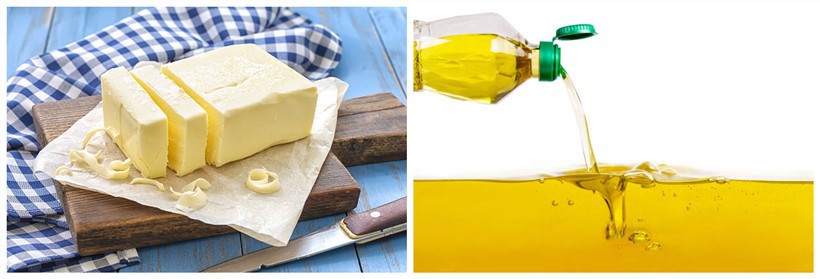
Fats and oils that are suitable for human consumption are referred to as edible fats and oils, commonly known as oil and fat. Oil and fat are the general terms used for fats and oils used in food. Oils are liquid at room temperature, while fats are solid. They are derived from both animal and plant sources.
Fats and oils are composed of three elements: carbon (C), hydrogen (H), and oxygen (O). Chemically, fats and oils belong to simple lipids, and their molecules are formed by the combination of one molecule of glycerol and three molecules of fatty acids. Lipids, in addition to triglycerides, also include monoglycerides, diglycerides, phosphatides, cerebrosides, sterols, fatty acids, fatty alcohols, and fat-soluble vitamins. The term "oil and fat" typically refers to esters formed by glycerol and fatty acids, also known as true fats or neutral fats. Other lipids are collectively referred to as lipids.
Fats and oils can be broken down into glycerol and fatty acids, with fatty acids accounting for about 95% of the mass of fats and oils. There are many different types of fatty acids, which, when combined with glycerol, form various fats and oils with different states and properties.

Fatty acids can be divided into saturated fatty acids and unsaturated fatty acids. Unsaturated fatty acids contain one or more double bonds, ranging from 1 to 6 in the molecule. Saturated fatty acids can be further classified into low-level saturated (volatile) fatty acids and high-level saturated fatty acids (solid fatty acids). Low-level saturated fatty acids have carbon atom numbers below 10 and are liquid at room temperature. High-level saturated fatty acids have carbon atom numbers greater than 10 and are solid at room temperature. The more unsaturated bonds in a fatty acid, the lower its melting point, and the more susceptible it is to chemical reactions such as rancidity, oxidation, and hydrogenation.
Classification of oils and fats
- Natural oils and fats: Plant oils: Commonly used plant oils include soybean oil, cottonseed oil, peanut oil, sesame oil, olive oil, palm oil, rapeseed oil, corn oil, rice bran oil, coconut oil, cocoa butter, sunflower seed oil, etc. Animal fats: Butter, lard, tallow, fish oil, microbial oils.
- Artificial oils and fats: Shortening, margarine.
Commonly used oils in baking and their main characteristics
1. Soybean oil: Soybean oil is often used as a frying oil and as a raw material for artificial fats. Its fatty acid composition is over 80% unsaturated fatty acids. It contains 8.3% highly unsaturated fatty acids (linoleic acid), which gives it a fishy taste. Therefore, it is often subjected to a small amount of hydrogenation to produce a product similar in composition to cottonseed oil.
2. Palm oil: Palm oil is obtained from the fruit of the oil palm tree. Palm oil can be extracted from the pulp, while palm kernel oil can be extracted from the seed core. The unsaturated fatty acid content of palm oil is 50%-60%, which is less than other plant oils. Oleic acid is the most common unsaturated fatty acid, while soft fatty acids (palmitic acid) are the most common saturated fatty acids, accounting for about 45%. Therefore, it has good stability and is a semi-solid vegetable fat with a melting point of 30-40°C. If palm oil is left to stand in a semi-melted state for a period of time, solid fat will form at the bottom and liquid oil will form at the top. The oil on the top can be separated and used for frying, while the slightly softer solid can be used as shortening and the harder one can be used as hard butter. It is commonly used as a substitute for cocoa butter and is an ingredient in chocolate.
3. Pork lard: Pork lard is the fat under the skin of the back and belly of pigs, as well as the fat around their internal organs. It is refined, decolorized, deodorized, and purified. The fatty acid characteristic of pork lard is that its carbon atoms are odd-numbered, which can effectively identify pork lard. Over half of the unsaturated fatty acids in pork lard are oleic acid and linoleic acid, while the saturated fatty acids are mostly soft fatty acids. Pork lard has a low melting point, with the melting point of back fat at 28-30°C and the highest quality fat around the kidneys at 35-40°C. Therefore, it melts easily in the mouth, giving a cool and refreshing feeling. Pork lard has good shortening properties, but its fusion properties are slightly poor, and its stability is also not very good. Therefore, lightening or transesterification reactions are often used to improve the quality of pork lard.

4. Shortening: Shortening is a type of fat that is typically derived from refined and processed animal or vegetable oils through methods such as hydrogenation, blending, rapid cooling, and kneading to impart plasticity and emulsifying properties for food processing purposes. It is not usually consumed directly but rather used as an ingredient in food production.
There are two main types of shortening: blended and hydrogenated.
- Blended shortening contains a higher proportion of vegetable oils, making it more prone to oxidation and rancidity. Its antioxidant measurement, known as the Active Oxygen Method (AOM), is typically around 40 hours, while some may have values as low as 16-18 hours. However, due to its good plasticity, consistency, and affordability, blended shortening is commonly used in the production of pastries, bread, and other baked goods.
- Hydrogenated shortening, on the other hand, is typically derived from a single vegetable oil (such as cottonseed oil or soybean oil) through hydrogenation. Compared to blended shortening, hydrogenated shortening produced using the interesterification method has better stability at the same consistency. Its AOM value is usually above 70 hours. If multiple hydrogenated oils are blended together, a shortening with both excellent stability and a wide range of plasticity can be obtained. This type of hydrogenated shortening is particularly suitable for use in cookies and deep-fried products.
5. Artificial Cream: Artificial cream is a food product made primarily from a mixture of edible animal and vegetable fats, as well as hydrogenated, fractionated, or interesterified oils. Water and other additives may or may not be added to the mixture. The product is then emulsified and either rapidly frozen or kneaded without rapid cooling to achieve a pliable or flowing texture that resembles natural cream.

Rancidity of fats
Fats or foods with high fat content, during storage, undergo oxidation and hydrolysis reactions due to the presence of oxygen in the air, sunlight, microorganisms, enzymes, water, and other factors. As a result, unstable fat molecules gradually degrade into low-molecular-weight degradation products, leading to unpleasant odors, bitter taste, and even toxicity. This phenomenon is known as rancidity of fats.
1. Hydrolytic rancidity: Oils or fats with a higher content of lower fatty acids may contain esterases produced by either residual enzymes or contaminating microorganisms. Under the action of these enzymes, hydrolysis of the fats occurs, resulting in the formation of free lower fatty acids (including those with carbon chain lengths below C10), glycerol, monoacylglycerols, or diacylglycerols. Short-chain fatty acids (such as butyric acid, valeric acid, caprylic acid, etc.) have distinct sweaty and bitter tastes, leading to the development of a rancid odor in the fats. This phenomenon is known as hydrolytic rancidity. However, the formation of free higher fatty acids through hydrolysis does not produce unpleasant odors. For example, the hydrolysis of butyric acid in butter produces an unpleasant smell. The presence of lipases is the main cause of this effect, although it is less common in higher fatty acids.

2. β-Oxidation of fatty acids, also known as ketone acid spoilage, occurs when free saturated fatty acids generated from the hydrolysis of fats undergo oxidation catalyzed by a series of enzymes, resulting in the formation of ketonic acids and methyl ketones with an unpleasant odor. This degradation caused by oxidation primarily occurs between the α and β carbon positions of saturated fatty acids, hence it is referred to as β-oxidation. Containing higher amounts of water and protein, oil-based foods or fats are prone to microbial contamination, leading to hydrolytic spoilage and β-type spoilage. To prevent these types of spoilage, it is necessary to enhance the purity of fats, reduce impurities and moisture content during oil processing, ensure dry and clean packaging containers to avoid contamination, and store them under lower temperatures.
3. Oxidative rancidity, also known as auto-oxidation of fats, occurs when unsaturated fatty acids in fats are exposed to air and undergo automatic oxidation, leading to the breakdown of these acids into lower fatty acids, aldehydes, and ketones, resulting in an unpleasant odor and a bitter taste. This phenomenon is referred to as the oxidative rancidity of fats. Auto-oxidation of fats is the primary cause of spoilage in fats and food products containing fats. This type of spoilage primarily occurs in fats with higher levels of unsaturated fatty acids, such as soybean oil, corn oil, olive oil, and cottonseed oil.
Enzymes, sunlight, microorganisms, oxygen, temperature, and metal ions can accelerate the process of spoilage, and hydrolysis is also a major factor that promotes spoilage.

HSF Biotech Butter Powder Provides Best Solution for the Baked
One issue with using butter in baking is that it contains water, which can lead to spoilage and mold growth. This is especially problematic in high-moisture products like bread, cakes, and pastries. To combat this, some manufacturers have turned to using butter powder instead of traditional butter.
HSF Biotech Company produces Butter Powder, which is made by encapsulating fat in a matrix of starch and casein. This creates a dry, stable product that is resistant to moisture and spoilage. By using butter powder in baking recipes, manufacturers can extend the shelf life of their products without sacrificing taste or texture.

Another consideration when formulating recipes is the use of fat emulsifiers and enzymes. Enzymes like lipase can break down fats and cause rancidity, while emulsifiers can interfere with the structure of baked goods. When designing recipes for long shelf life, it is important to avoid using these ingredients or to use them in moderation.
The use of butter in baking can be a challenge when it comes to preserving the quality and safety of baked goods. However, by using innovative products like butter powder and carefully formulating recipes to avoid spoilage and rancidity, manufacturers can create delicious and long-lasting baked goods that meet consumer demands for both taste and safety.

Want to get FREE SAMPLES, please contact our specialists at sales@healthfulbio.com.