



Microencapsulation technology is a technology that uses natural or synthetic polymer materials to encapsulate solid, liquid, or even gaseous substances to form microcapsules with semi-permeable or sealed capsules. The tiny particles formed are called microcapsules. Microencapsulation technology can improve the physical properties of the encapsulated substances, isolate the active ingredients from the external environment, enhance stability, reduce volatility, and extend the shelf life. In addition, it also has a controlled release function. Due to its unique advantages, microencapsulation technology has been deeply studied and applied in the fields of medicine, spices, food processing, textiles and clothing.
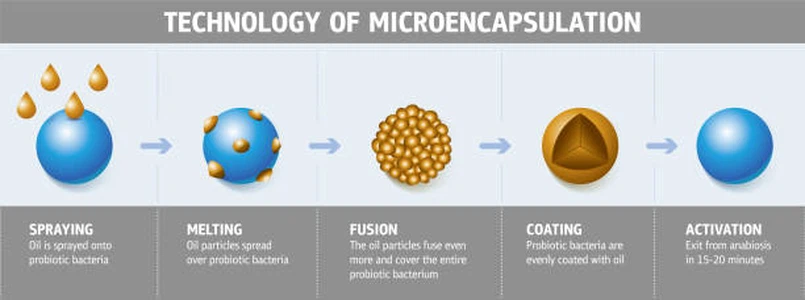
The research on microencapsulation technology started in the 1930s. It was a physical method to prepare gelatin microcapsules of cod liver oil in liquid paraffin with gelatin as the wall material. In the late 1940s, microencapsulation technology made a breakthrough and began to be used in drug preparation coating. In recent years, microencapsulation technology has been applied in many industries and fields such as flavor sustained release, new dyes, and food processing.
Classification of microcapsule wall materials
The wall material of microcapsules is the outer shell of the capsule. The wall materials in different application fields are also different. At present, there are three main types of wall materials commonly used in microcapsule technology: natural polymers, semi-synthetic polymer materials, and fully synthetic polymer materials. The principle of selecting wall materials is: that the wall material can be compatible with the core material, and the performance is stable and resistant to high temperature, friction, and extrusion. The wall material must have certain permeability, hygroscopicity, and solubility.
1. Natural polymer materials
The natural polymer materials that can be used as wall materials mainly include gelatin, gum arabic, shellac, lac, starch, dextrin, wax, rosin, sodium alginate, corn protein, etc.
Natural polymer materials generally have the advantages of non-toxicity, low environmental harm, stability, and easy film formation.
2. Semi-synthetic polymer materials
The semi-synthetic polymer materials that can be used as wall materials mainly include methyl cellulose, methylcellulose, ethyl cellulose, etc.
Semi-synthetic polymer materials have the advantages of low toxicity, high viscosity, and increased solubility after salt formation, but they are easily hydrolyzed, not resistant to high temperatures, and need to be temporarily prepared.
3. Fully synthetic polymer materials
The fully synthetic polymer materials that can be used as wall materials mainly include polyethylene, polystyrene, polybutadiene, polypropylene, polyether, polyurea, polyethylene glycol, polyvinyl alcohol, polyamide, polyacrylamide, polyurethane, polymethyl methacrylate, polyvinyl pyrrolidone, epoxy resin, polysiloxane, etc.
Fully synthetic polymer materials have good film-forming properties, good chemical stability, high mechanical strength, convenient storage and transportation, and are biodegradable or bioabsorbable. However, they require a large amount of organic solvents, are costly, and have great harm to the environment. Therefore, non-toxic or low-toxic materials with good solubility in the original drug should be selected. In addition, in the process of preparing microcapsules. Side reactions have a significant impact on microcapsules. Therefore, it is necessary to avoid selecting some monomers that can cause reactions with the capsule core and some of the additives therein for encapsulation.
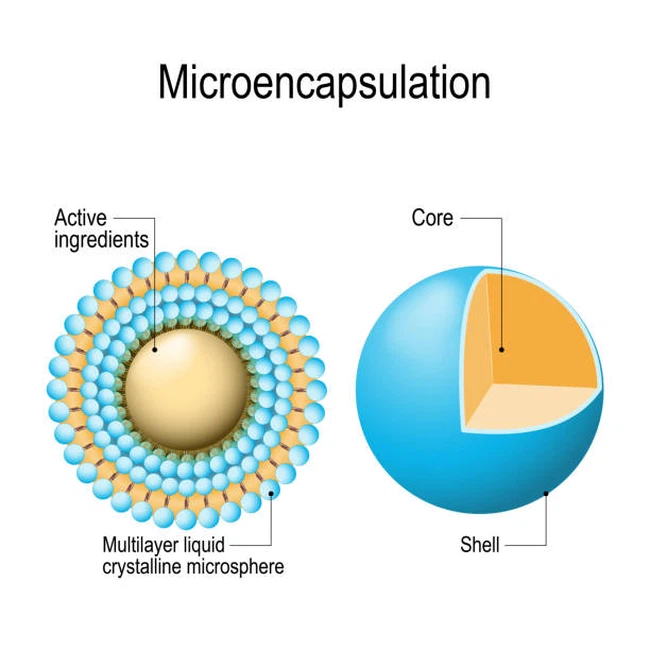
Preparation method of microcapsules
1) Disperse the processed core material (internal phase) in the microencapsulation medium;
2) Add film-forming material (wall material) to the formed dispersed system;
3) Gather, deposit, or wrap the wall material around the dispersed core material in some way;
4) Use certain physical and chemical means to treat and solidify the wall material so that the membrane shell reaches a certain stable state.
Application of microcapsules in various fields
Microcapsules mainly have the following six functions: Powdering, turning liquids, gases, etc. into dry powders, reducing volatility, making some volatile substances difficult to volatilize; Improving the stability of substances (substances that are easily oxidized, easily decomposed by light, and easily affected by temperature or moisture); Masking taste; Isolating active ingredients; Controlling release. Due to these six main functions, they are widely used in many fields such as medicine, food, and dyes.
- Biological field
The process of encapsulating or wrapping biological cells with microencapsulation materials to form microcapsules containing biological cells is called microencapsulation of biological cells. Cells immobilized by microcapsules can be protected from harsh environmental conditions (acids and alkalis, temperature, organic solvents, toxic substances, etc.); immobilized cells are easy to culture and can be cultured continuously. Microencapsulated biological cells have been used in medicine, environmental protection, the food industry, and other fields due to their excellent performance.
Microencapsulated animal cells have been used to prepare monoclonal antibodies due to their excellent isolation and controlled release properties. Experiments have shown that injecting microencapsulated hybridoma cells into the subcutaneous tissue of mice can cause them to secrete antibodies. Unlike microencapsulated hybridoma cells, unencapsulated hybridoma cells are transplanted into immunodeficient mice, which is fatal to mice.
Microencapsulated probiotics also have their unique advantages. Although probiotics have a good effect in improving the gastrointestinal function of humans and animals, inhibiting the growth of pathogens and promoting the growth of animal bodies, the number of live bacteria is greatly reduced during the process of production to the intestine, thus limiting the physiological effects of probiotics. However, the application of microencapsulation technology in the production of probiotics is expected to better solve the problems of probiotics' intolerance to gastric acid and short storage periods. Japan and South Korea are the countries that applied microencapsulation technology to probiotics earlier and have applied for many patents. my country's research in this area started relatively late but has made rapid progress.
- Pharmaceutical field
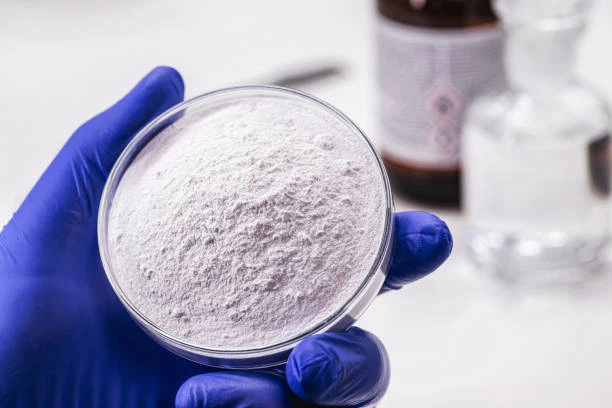
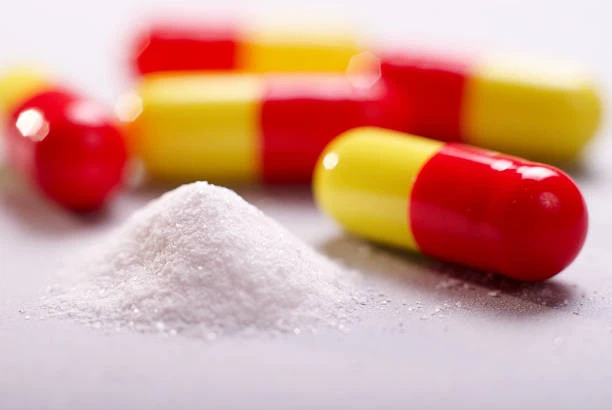
Microcapsules have many applications in medicine and medical treatment, with remarkable results and great potential. At present, related research is also very in-depth. The advantages of drug microencapsulation are that it can reduce side effects, isolate gastric acid decomposition, improve drug stability, control drug release, etc.
The microencapsulation of Chinese herbal medicines greatly reduces the bitterness, odor, and side effects of drugs, reduces irritation to the stomach, and reduces drug volatilization. 10-Hydroxycamptothecin is a camptothecin anti-tumor drug used clinically in my country, but its application value is limited by its large adverse reactions and low bioavailability. The 10-Hydroxycamptothecin (HCPT) sustained-release microcapsules prepared by electrostatic attraction layer-by-layer nano-self-assembly technology (LBL method) have high encapsulation efficiency and sustained-release properties, which enhances the application value of Chinese herbal medicine HCPT [1].
- Daily chemical field
In terms of daily chemical products, plant essential oil microcapsules are mainly used in detergents, skin care products, and cosmetics. Li Xuejing et al. studied the role of essential oil starch microcapsules in laundry detergents and found that when starch microcapsules are used to encapsulate essential oils and liquid essential oils, the performance of essential oils during washing and after rinsing can be enhanced at a low total amount. After the essential oil is microencapsulated, the plant essential oil is automatically and evenly released to the skin tissue with the microcapsule as the carrier, and it is kept in effective concentration for a long time, at the same time it plays the role of stabilizing the effective ingredients and reducing the irritation of special additives to the skin.
- Food field
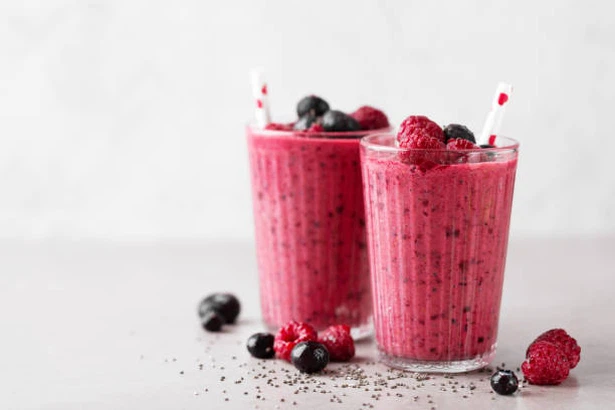
The application of microcapsule technology in the food field has the functions of facilitating transportation and storage, preventing the volatilization, oxidation, and deterioration of some unstable food raw materials, reducing or covering up the bad smell or bitterness in the food, regulating the release of flavoring microcapsules in the food to achieve the purpose of long-lasting flavor and long-lasting efficacy, and avoiding the mutual influence of multi-component additives in the food. For example, some natural pigments have the problem of poor solubility and stability in application. After microencapsulation, it can not only change their solubility properties but also improve their stability.
- Dye field
The technical core of microcapsule dyeing is to make microcapsules with dyes as core materials. When dyeing, the dye microcapsules can be directly put into the dye bath, and the concentration difference of the dye in the fiber, dye bath, and capsule is used to make the dye continuously released, adsorbed, and dyed on the fiber to complete the dyeing. Using microcapsule dyes for dyeing can produce colorful textiles and effectively solve some problems in textile printing and dyeing, such as reducing costs, improving dye utilization, facilitating wastewater purification, and achieving auxiliary-free and water-free dyeing. The three primary colors of high-temperature dispersed dyes were selected to investigate the color-matching performance of microcapsule dyeing on polyester suede. The results showed that the saturation of dispersed dye microcapsule color samples was generally improved, and the apparent color depth increased, indicating that its color matching is feasible.
 |
 |
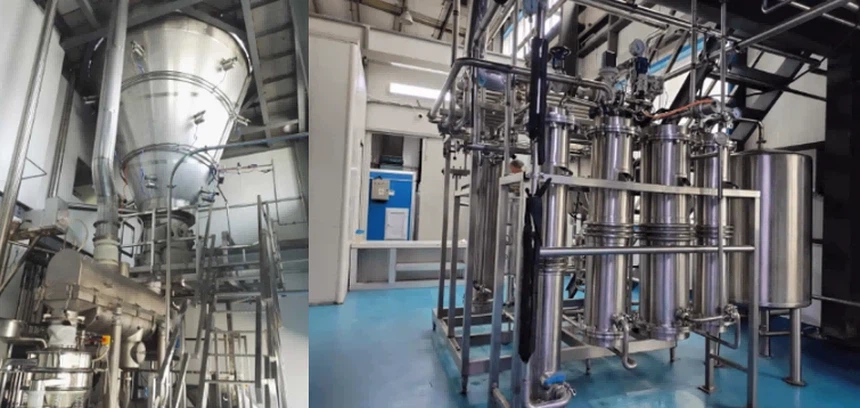
HSF's Microencapsulation Technology
For more details, please contact us:
Email: sales@healthfulbio.com
Whatsapp: +86 18992720900