


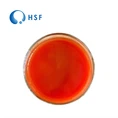

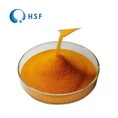
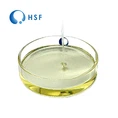
β-carotene is an internationally recognized excellent food and feed additive that has both coloring and nutritional supplementation. It is widely found in animals, plants, and microorganisms, and together with other pigments, it makes these organisms present a variety of colors. β-carotene is the most important carotenoid, a type of natural pigment widely found in many plants, and a type of compound necessary for the human body. β-carotene is the most effective and abundant provitamin A. It has the dual functions of coloring and nutrition. It is a Class A excellent and nutritious food additive recognized by the Joint Expert Committee on Food Additives of the Food and Agriculture Organization of the United Nations and the World Health Organization. It is one of the very few pigments that have won the trust of consumers.
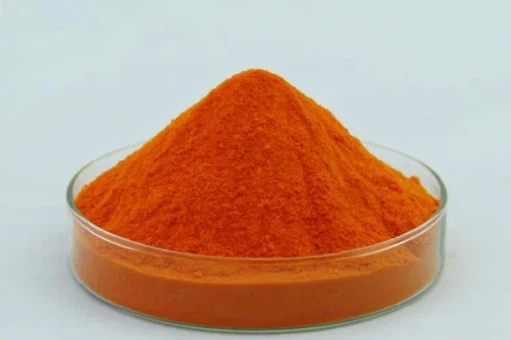
β-carotene is a purple-red crystal or crystalline powder, insoluble in water, and soluble in oil. Its coloring range is generally yellow to orange-red, with a yellow hue at low concentrations and an orange-red hue at high concentrations. It has good coloring properties and stable and uniform color. It is relatively stable within the pH range of general foods (pH2-7) and is not affected by reducing substances. It can coexist with elements such as K, Zn, and Ca without changing color. β-carotene contains conjugated double bonds in its molecules and is easily decomposed by oxygen, heat, and light, and iron ions can cause it to fade.
Mechanism of action of beta carotene
β-carotene is a member of natural chemicals. It exists in large quantities in plants, giving fruits and vegetables a rich yellow and orange color. β-carotene is also used as a colorant in foods such as margarine, baked goods, and candies.
β-carotene is a precursor of vitamin A synthesized by the human body. It can be stored in the liver and gradually converted into vitamin A as needed. It will not be harmful due to excessive vitamin A. It is clinically used to treat vitamin A deficiency and complications such as night blindness and skin keratosis. In addition, it also has a good effect on promoting the reproduction and growth of animals.
β-carotene will be converted into vitamin A by the human body. If the human body ingests excessive vitamin A, it will cause poisoning. Therefore, the human body will only convert β-carotene into vitamin A when it is needed. This feature makes β-carotene a safe source of vitamin A.
beta-carotene dosage form
Because β-carotene is insoluble in water and slightly soluble in oil, and β-carotene itself is very easy to oxidize, its application in beverages and other foods is greatly limited. In practical applications, β-carotene is generally made into different dosage forms according to the characteristics of different foods, including β-carotene oil suspension, β-carotene water-dispersible dry powder, β-carotene emulsion, etc., to meet the different processing needs of food.
(I) β-carotene oil suspension
β-carotene oil suspension is a brick-red viscous liquid, generally containing 30% β-carotene. β-carotene oil suspension is an oil-soluble product, mainly used in oil-based foods, including butter, margarine, edible oil, etc., and can also be used in cakes, sandwiches, sauces, salad dressings, etc.
(II) β-carotene water-dispersible dry powder
β-carotene water-dispersible dry powder is a yellow to red or reddish brown powder with fine particles. It has good fluidity, can be dispersed in cold water, and produces a yellow-to-orange color.
β-carotene water-dispersible dry powder is made by evenly dispersing β-carotene in a matrix composed of vegetable oil, starch, colloid, etc., and adding vitamin E and vitamin C as antioxidants. After the molding process, it forms fine particles with β-carotene inside and a coating agent outside, so that β-carotene is isolated from air, light, etc., greatly improving the stability of the product. Because it can be evenly dispersed in water, it can be used for beverages, solid beverages, and liquid foods, and can also be used for coloring and nutritional fortification of candies, dairy products, puddings, jams, biscuits, ice cream, instant noodles, etc., as well as health products and medicines.
β-carotene water-dispersible dry powder is widely used in hard capsules and tablets in health foods. It is convenient to package and transport. It can be evenly dispersed in cold water and is convenient for use in beverages and liquid foods. Because it is coated with a coating agent, it reduces contact with the outside world and has a longer shelf life.
(III) β-carotene emulsion
β-carotene emulsion is a yellow to orange-red flowing liquid with good dispersibility in water, and the color range is from yellow to orange. β-carotene emulsion is made by dissolving β-carotene in slightly heated vegetable oil, adding antioxidants, emulsifiers, and deionized water, dispersing it with a high-speed shearing machine, and then homogenizing it with a high-pressure homogenizer to form a uniform emulsion.
The emulsion dosage form has particularly good application stability in beverages and has strong adaptability to different beverage formulas. In addition, by controlling the size of the droplets, the turbidity of the solution can be easily controlled. It can also be made into an emulsion for clarifying beverages, and the color can also be made yellowish or reddish. When using β-carotene emulsion, it can be directly added to the liquid ingredients of food, without the need to make a reserve solution, and it is more convenient to use. Since no coating agent is required, its cost is also lower than that of powdered β-carotene. The shelf life of the emulsion dosage form is shorter than that of the dry powder, and the storage conditions are more stringent than those of the dry powder, but it can fully meet the needs of actual production.
Due to the incomparable advantages of the β-carotene emulsion dosage form, it will surely become the most important and most commonly used dosage form in beverages, especially fruit juice beverages.
HSF's fermentation Beta Carotene
HSF's NutraColour® Beta carotene which covers below three main lines, is obtained from Blakeslea trispora through a fermentation process using the two sexual mating types of the fungus in specific proportions.
|
|
|


|
SPECIFICATION |
|
|
Beta Carotene Crystals |
96% |
|
Beta Carotene CWS/CWD |
20% |
|
Beta Carotene OS |
30% |
|
Beta Carotene BD |
10%, 20% |
For more details, please contact us:
Email: sales@healthfulbio.com
Whatsapp: +86 18992720900