



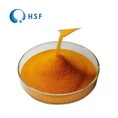

Allulose (D-Allulose) is a rare monosaccharide and a stereoisomer of fructose that exists naturally in trace amounts in the environment. Allulose has a taste similar to sucrose, with a soft and delicate sweetness that does not vary with temperature changes. It has approximately 70% of the sweetness of sucrose and only 10% of the calories, making it an ideal substitute for sucrose. The structure of Allulose is stable, and it exhibits strong chemical inertness, allowing it to adapt to acidic or alkaline environments. During glycosylation reactions, Allulose generates a large amount of antioxidant components, which can reduce oxidative losses and improve product quality during processing and storage.
Allulose has wide-ranging applications, particularly in the health and food industries.
- Health Supplements
Allulose can increase plasma insulin levels, which can help lower blood sugar and lipids, prevent obesity, and provide antioxidant and neuroprotective effects.
- Beverages
Allulose offers excellent processing stability and high solubility, making it ideal for reducing sugar content while maintaining the overall taste and quality of beverages.
- Baked Goods
Allulose is effective in high-temperature conditions, providing good caramelization and water retention properties. This gives baked goods desirable color, moisture, and stable hardness.
- Confectionery
Allulose has low crystallization rates, making it useful for controlling sugar content, reducing calories, and maintaining the texture, elasticity, viscosity, and consistency of full-sugar confectionery products.

- Biomaterials
Plant-based materials made from Allulose are environmentally friendly, waterproof, and transparent, making them useful in the field of liquid crystal displays.
- Pharmaceuticals
As a type of sugar-based anthelmintic, Allulose can inhibit the growth of parasites.
Overall, Allulose has extensive applications in various industries, especially those requiring natural sweeteners with lower calorie counts and strong health benefits.

There are three main theoretical production methods of aloketose: plant extraction, chemical synthesis, and biological conversion. Plant extraction faces the problem of low aloketose content in plants, while chemical synthesis is hindered by high costs, process difficulties, complex purification, and low yield. Therefore, industrial production primarily employs the biological conversion method.
In the biological conversion method, refined starch serves as the initial raw material that undergoes biocatalysis and refinement to obtain fructose, which serves as the substrate (or directly use fructose, glucose, or fruit syrup as raw materials). Allulose is refined through the utilization of fructose isomerases.
Overall, the biological conversion method for producing Allulose is a refined process that utilizes fructose produced from refined starch that is obtained by means of biocatalysis and refinement.

Consumer Attitudes Towards Allulose
Based on the positive recognition of the safety of Allulose, as early as 2011, the U.S. Food and Drug Administration approved Allulose as a GRAS substance for legal sales in the country and allowed its application in the food processing industry. However, at that time, due to factors such as weak awareness of sugar reduction among people, consumers' acceptance of Allulose was not high.
In recent years, with the rise of global sugar reduction trend and the awakening of consumer health consciousness in various countries, along with many countries implementing "sugar tax" policies, Allulose, as a natural low-calorie sweetener, has been increasingly applied in fields such as food, beverages, and medical products, becoming the most promising sugar substitute to replace sucrose. Especially in 2019, when the U.S. Food and Drug Administration announced the removal of Allulose from the "total sugar" and "added sugar" labels, aloketose showed even stronger market demand and greater market potential.
Although at present, most consumers are still not very familiar with this new type of sweetener, and their awareness and acceptance of Allulose are not high, in the future, with companies continuously strengthening publicity, people's awareness and acceptance of Allulose are expected to significantly increase. A company conducted a survey to investigate consumers' attitudes towards Allulose. The company randomly selected over a thousand respondents who had limited knowledge about the functional characteristics of Allulose. Only 7% of the respondents indicated acceptance. However, after the company introduced the sweet taste, calorie content, and mouthfeel of Allulose to them, 95% of the respondents expressed acceptance, and even around half of the respondents considered Allulose as the ideal substitute for sugar. They would choose Allulose as the preferred sweetener when purchasing beverages.

HSF Biotech PhytoSweet™ Sweeteners
HSF focuses on the production, sales, and technical development of functional food ingredients. The company's main product lines include plant sterols/esters, natural vitamin E, functional oil microencapsulation, functional powder microencapsulation, fermentation, and dozens of specialized customized products such as Allulose Powder and erythritol Powder, promoting new concepts in healthy food consumption.
Among these products, HSF's Allulose has high purity, uniform particles, and a pure sweetness, making it suitable for a wide range of applications in food, beverages, and health products. It provides customers with a new choice of high-quality functional sugar substitutes and application solutions.
Want to get FREE SAMPLES, please contact our specialists at sales@healthfulbio.com.