



Four main phytosterols in avocados were identified by gas chromatography-tandem mass spectrometry: β-sitosterol, campesterol, cholesterol, and stigmasterol, and their contents were 59.47, 30.36, 15.34, and 2.72 mg/100 g, respectively. Taking VE as a control, the phytosterol p-radicals (1,1-diphenyl-2-trinitrophenylhydrazine (DPPH) free radicals, hydroxyl free radicals (·OH) and superoxide anion free radicals in avocado were measured and analyzed. Basic (O2-·)) removal ability. Phytosterols have obvious scavenging effects on DPPH free radicals, ·OH, and O2-·, and the half inhibitory concentrations are 6.82, 35.92, and 17.08 μg/mL, respectively. The antibacterial activity of crude sterol extracts against Escherichia coli, Bacillus subtilis, Staphylococcus aureus and Salmonella was analyzed by the inhibition zone method. The order of the intensity of inhibition is Bacillus subtilis>Staphylococcus aureus>Salmonella>E.coli, indicating that avocado phytosterols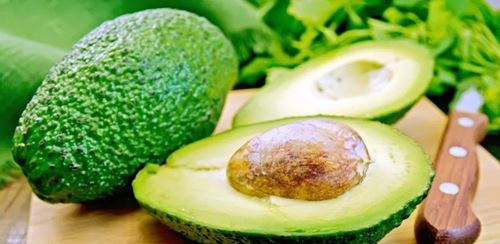 have good antibacterial activity. Avocadosterol has a strong scavenging effect on DPPH free radicals, ·OH, and O2-·. As the mass concentration of sterol increases, the scavenging rates of the three free radicals gradually increase. The corresponding mass concentrations of sterol samples when reaching the IC50 were 6.82, 35.92, and 17.08 μg/mL, respectively. When the mass concentration of the sterol sample was 10 μg/mL, the DPPH free radical scavenging rate reached 80.03%, which was 2.8 times that of the control VE. It shows that the scavenging ability of avocadosterol samples on DPPH free radicals is much higher than that of VE. When the mass concentration of the sterol sample is 50 μg/mL, its clearance rate of ·OH is 1.72 times that of VE. It can be seen that the removal rate of ·OH by avocadosterol sample is better than that of VE. When the mass concentration of the sterol sample is 20 μg/mL, its O2-·clearance rate is 1.52 times that of VE. It can be seen that the avocado sterol sample has a strong scavenging ability for O2-·, and the scavenging ability is always higher than that of VE.
The common feature of these two antioxidants is that they have only one phenolic hydroxyl group. The basic skeleton of phytosterols is the steroid nucleus of cyclopentane perhydrophenanthrene composed of three six-membered rings and one five-membered ring. The hydroxyl group is located at the 3 position of the six-membered cyclohexane, and there are no other functional groups around the hydroxyl group. The phenolic hydroxyl group of VE is located at the 6-position of the benzene ring of the chroman structure, and its adjacent 5- and 7-position methyl groups restrict its further reaction with free radicals due to steric hindrance.