



Source
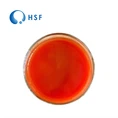
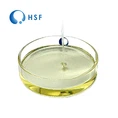
DHA algal oil is extracted from algae plants, including Crypthecodinium cohnii, Schizochytrium sp., Thraustochytrium sp., and over ten other microalgae species that contain DHA. Currently, the production of DHA algal oil using microalgae has been successfully commercialized both domestically and internationally. There are three main cultivation methods for DHA-producing microalgae: photoautotrophic (autotrophic) cultivation, heterotrophic fermentation, and mixotrophic cultivation, with fermentation being the most common method.
In recent years, there has been rapid development in the extraction technology of algal oil. Supercritical extraction of algal oil is gradually replacing traditional n-hexane extraction methods, improving the safety of the products. The promotion and application of molecular distillation for separation and purification technology have significantly increased the concentration of DHA in microalgae DHA oil.
Safety Evaluation of DHA Algal Oil
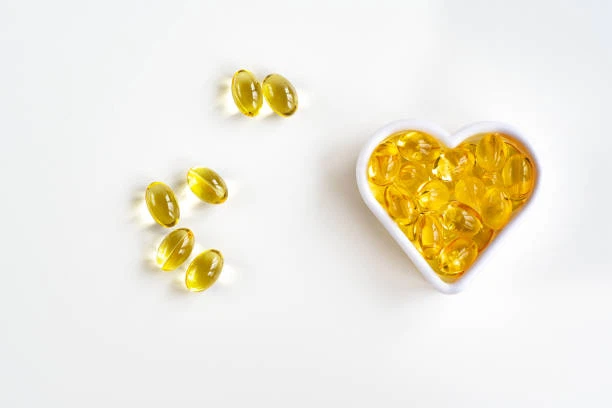
DHA algal oil has gained significant attention as a source of omega-3 fatty acids, particularly docosahexaenoic acid (DHA). As with any food product, ensuring its safety is paramount. Here, we will discuss the safety evaluation of DHA algal oil.
DHA algal oil, as a food ingredient, is subject to stringent regulatory oversight in many countries. Authorities such as the Food and Drug Administration (FDA) in the United States and the European Food Safety Authority (EFSA) in Europe have established guidelines and regulations to ensure the safety of food products, including DHA algal oil. These regulations encompass aspects such as maximum allowable levels of contaminants like heavy metals, pesticides, and microbial contaminants.
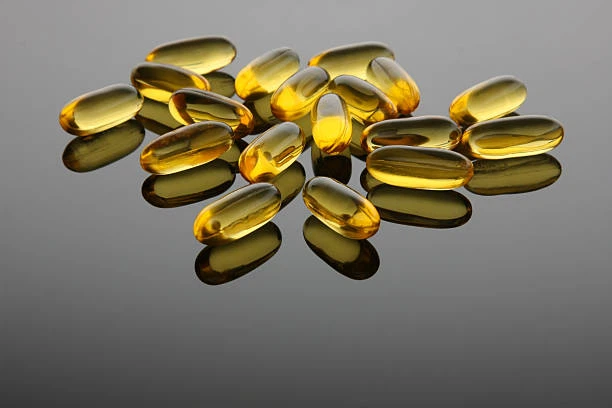
To guarantee the safety of DHA algal oil, rigorous quality control measures are implemented throughout the production process. This includes monitoring the cultivation conditions of microalgae, conducting regular testing for contaminants, and adhering to Good Manufacturing Practices (GMP) and Hazard Analysis and Critical Control Points (HACCP) protocols. These measures help identify and mitigate potential risks, ensuring the safety of the final product.
Extensive scientific research has been conducted to evaluate the safety of DHA algal oil. Studies have examined its potential toxicological effects, allergenicity, and long-term exposure risks. These studies have consistently demonstrated the safety of DHA algal oil as a food ingredient, with no significant adverse effects reported when consumed within recommended doses.
The safety evaluation of DHA algal oil encompasses various aspects, including its source and production methods, regulatory compliance, quality control measures, and scientific research. With strict adherence to these factors, DHA algal oil has been deemed safe for consumption and offers a valuable source of DHA omega-3 fatty acids.

Common Types of DHA Algal Oil Products and Their Production Techniques
When DHA algal oil is used in food products, the most common approach is to utilize microencapsulation techniques. Microencapsulation involves the formation of a protective layer around the DHA-rich algal oil, resulting in microcapsules. This technique helps reduce oxidation, minimize fishy odor, and transform the oil from a liquid to a solid state, facilitating its usage and storage. Currently, commercially available microencapsulated DHA algal oil products are primarily water-soluble, although there are also hydrophobic microencapsulation products.
Water-soluble microencapsulated DHA algal oil, when exposed to moisture, dissolves the capsule wall and forms an emulsion, with DHA surrounded by a "liquid membrane." This type of microcapsule is suitable for producing powdered food products such as milk powder, soybean powder, rice powder, and similar items.

Microencapsulation
There are several methods for microencapsulation, which can be used for lipid encapsulation. The main techniques include spray drying, molecular inclusion, and interfacial polymerization. In the commercial production of microencapsulated DHA algal oil, the emulsion spray drying method is commonly used. This involves dissolving the algal oil in a hydrophilic wall material solution, adding an emulsifier for homogeneous emulsification, and then subjecting it to spray drying. During the spray drying stage, either single-stage drying or two-stage drying using a fluidized bed can be employed. The emulsion spray drying method is mature, resulting in good solubility, dispersibility, long shelf life, and low cost. However, it may suffer from issues such as non-uniform microcapsule particle size.
The molecular inclusion method primarily utilizes beta-cyclodextrin with a special molecular structure as the wall material. Beta-cyclodextrin has a hydrophobic internal cavity and a hydrophilic exterior surface. After encapsulation, some original properties of the algal oil, such as odor, may change. This method can mask the undesirable odor but generally has lower encapsulation efficiency.
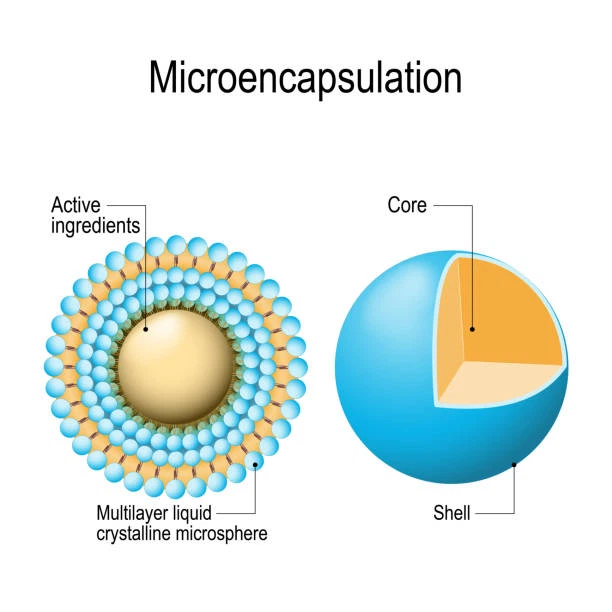
The interfacial polymerization method involves dispersing the core material, such as algal oil, in the aqueous phase as small oil droplets, followed by the addition of the wall material. By stirring, the core and wall materials undergo a polymerization reaction at the interface, forming a polymer film on the surface of the oil droplets. The resulting capsule wall is thin, but it leads to unstable physical properties of the product and difficulties in storage, thereby affecting its commercial production.
The Stability of Algal Oil
The stability of algal oil, which contains various unsaturated fatty acids including DHA, is easily compromised during processing and storage due to oxidation. Research suggested that the selection of appropriate wall materials, addition of antioxidants, and emulsifiers, as well as optimization of microencapsulation processes, are key factors in improving its stability. The choice of wall material is crucial for the microencapsulation and stability of DHA algal oil. The wall material should not only possess high water solubility but also exhibit good film-forming, emulsifying, drying, and moisture resistance properties.
There are three main categories of commonly used wall materials in the production of DHA algal oil.
- The first category includes plant gums such as gum arabic and sodium alginate.
- The second category comprises starch, polysaccharides, and their derivatives, such as porous starch, maltodextrin, and cyclodextrins.
- The third category consists of proteins, such as gelatin, casein, and whey protein.
From current research results, it appears that a combination of multiple wall materials yields better effects.
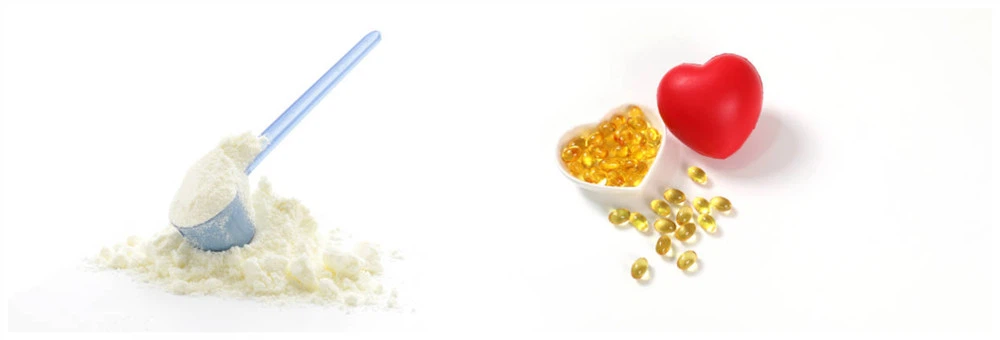
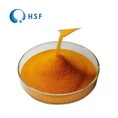
HSF Biotech Microencapsulated powder of DHA algal oil
Microencapsulation is a widely used technique in the food and supplement industries to enhance the stability, functionality, and application range of bioactive components. One prominent area of interest is the production of microencapsulated powder from DHA algal oil.
The production of microencapsulated powder often faces the challenge of obtaining particles with consistent size and morphology. High-pressure homogenization technology has proven instrumental in addressing this issue. HSF Biotech is subjecting the emulsion containing DHA algal oil to high pressures, the droplet size distribution can be significantly reduced, resulting in particles of uniform size and shape. This uniformity ensures consistent dosing and improves the overall quality of the final product.
One common concern associated with DHA algal oil is its distinct taste, which can be undesirable for certain applications. High-pressure homogenization technology offers an effective solution by creating a barrier around the oil droplets, thereby preventing direct contact with taste receptors. This encapsulation process effectively masks the taste of DHA algal oil, making it more palatable and suitable for a wider range of formulations, including functional foods, beverages, and dietary supplements.
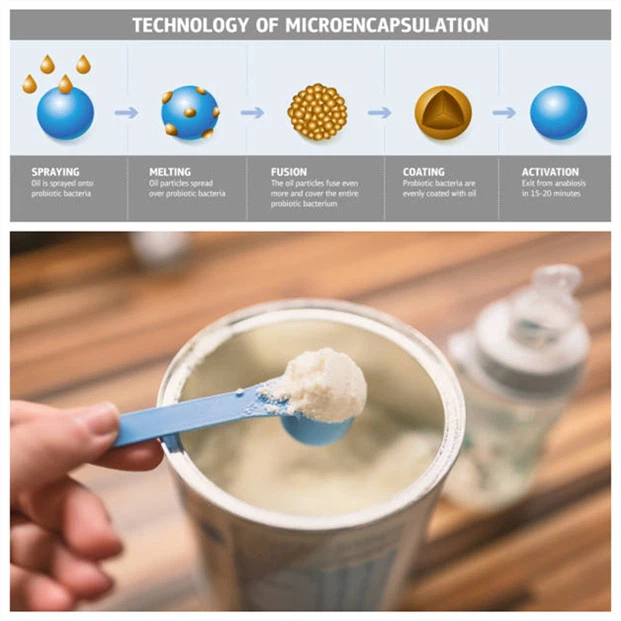
HSF Biotech's use of high-pressure homogenization technology in the production of microencapsulated powder from DHA algal oil offers significant advantages. It overcomes challenges related to particle inconsistency, imparts taste-masking functionality, and expands the application potential of DHA algal oil. The resulting microencapsulated powder provides improved stability, easy handling, and wider compatibility, making it an attractive option for various food, beverage, and supplement formulations. This technology plays a vital role in meeting consumer demands for innovative, convenient, and palatable products fortified with DHA algal oil.
Want to get FREE SAMPLES, please contact our specialists at sales@healthfulbio.com.