


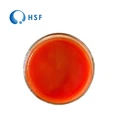

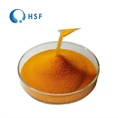
Beta-carotene has become a premier ingredient in the functional beverage and natural colorant industries. As consumers increasingly demand clean-label products free from synthetic dyes like Yellow 5 or Yellow 6, beverage formulators are turning to beta-carotene (E160a) for its vibrant yellow-to-orange hue and provitamin A nutritional benefits. However, incorporating beta-carotene into water-based drinks comes with a notorious technical hurdle: oxidation and rapid color fading.
A critical question for R&D teams and beverage manufacturers is: how do you prevent beta-carotene oxidation in beverages? The answer lies in understanding the chemical vulnerabilities of carotenoids and selecting an advanced, protected delivery system. In this comprehensive guide, we'll explore why beta-carotene degrades in liquid systems, proven formulation strategies to maintain color stability, and why HSF Biotech's Natural Beta-Carotene 10% CWS Beadlet is engineered to deliver superior stability and shelf-life performance.

Why Beta-Carotene Oxidizes Easily in Beverages
Chemically, beta-carotene is a polyene chain containing 11 conjugated double bonds. While this structure is responsible for absorbing light and producing its rich orange color, it also makes the molecule highly reactive and vulnerable to environmental stressors-especially in water-based beverage matrices.
1. Dissolved Oxygen and Headspace Air
Oxygen is the primary enemy of beta-carotene. During mixing, filling, and storage, dissolved oxygen in the water or trapped air in the bottle headspace attacks the conjugated double bonds, leading to auto-oxidation, isomerization, and a noticeable loss of color intensity.
2. UV Light and Photo-Oxidation
Clear PET or glass bottles are popular in modern beverage packaging to showcase vibrant drink colors. However, exposure to UV and fluorescent retail lighting triggers photo-oxidation, rapidly bleaching the beverage from a rich orange to a pale, unappealing yellow.
3. Thermal Processing (Pasteurization & UHT)
Beverages typically undergo pasteurization or ultra-high-temperature (UHT) treatment to ensure microbiological safety. High heat accelerates oxidative degradation and causes trans-beta-carotene to isomerize into cis-isomers, reducing both color vibrancy and vitamin A activity.
4. Acidic pH and Trace Metal Ions
Many juices, sports drinks, and functional waters have an acidic pH (typically 2.8–4.2) and contain trace minerals (such as iron or copper) or added Vitamin C. Under certain conditions, trace metals act as pro-oxidants, catalyzing free-radical chain reactions that destroy unprotected beta-carotene.
The Solution: Microencapsulation Technology & Antioxidant Synergy
Because free crystalline beta-carotene is lipophilic (fat-soluble) and chemically fragile, adding unencapsulated forms directly to beverages results in poor dispersion, ringing (neck-ring formation), and rapid oxidation.
The industry-proven solution is microencapsulation technology combined with built-in antioxidant protection. By embedding fine beta-carotene droplets inside a protective hydrophilic carrier matrix and drying them into cold-water dispersible (CWS) beadlets, the active core is physically shielded from oxygen, light, and heat.
How Microencapsulation Prevents Oxidation
Physical Oxygen Barrier: A dense wall matrix (such as Arabic gum, edible corn starch, and maltodextrin) acts as an impermeable shield, drastically reducing oxygen permeability during storage.
Built-In Antioxidant Defense: High-grade CWS beadlets incorporate natural antioxidants like Vitamin E (tocopherols) directly into the lipid core to neutralize free radicals before they attack the beta-carotene molecule.
Uniform Nano/Sub-Micron Dispersion: Upon dissolving in cold water, well-engineered beadlets release uniform sub-micron emulsion droplets. This prevents coalescence, sedimentation, and surface "ringing" where concentrated pigment would otherwise oxidize rapidly at the air-liquid interface.
Thermal Resilience: The protective wall matrix buffers the core against heat shock during pasteurization, ensuring minimal color loss from production line to retail shelf.

5 Practical Formulation Tips to Maximize Beta-Carotene Stability
Beyond selecting the right raw material grade, beverage manufacturers can follow these best practices to prevent oxidation:
Choose a Cold-Water Dispersible (CWS) Beadlet Grade: Avoid using standard oil suspensions or raw crystalline powders in aqueous drinks. Always select a specialized 10% CWS beadlet designed for instant dispersion and emulsion stability.
Control Dissolved Oxygen (Deaeration): Sparge the beverage base with nitrogen and minimize headspace oxygen during bottling to remove the fuel required for oxidation.
Use UV-Blocking Packaging: If using transparent bottles, incorporate UV absorbers into the PET resin or use shrink-sleeve labels to block high-energy light wavelengths.
Optimize Antioxidant Co-Formulation: Adding ascorbic acid (Vitamin C) at controlled levels (typically 100–300 ppm) helps scavenge dissolved oxygen in the water phase, working synergistically with the Vitamin E inside the microcapsule.
Pre-Hydrate Properly: Disperse the CWS beadlets in warm or room-temperature water under gentle agitation to form a smooth stock solution before adding it to the main batch tank, avoiding excessive high-shear exposure to air.
Unprotected Beta-Carotene vs. HSF 10% CWS Beadlet: Performance Comparison
| Feature | Unprotected / Conventional Forms | HSF NutraColour® 10% CWS Beadlet |
|---|---|---|
| Water Solubility | Insoluble; prone to floating and "ringing" | 100% Cold-Water Dispersible (CWS); uniform emulsion |
| Oxidation Resistance | High risk; rapid fading under light and air | Superior stability via multi-layer wall matrix + Vitamin E |
| Thermal Processing | Significant color degradation during pasteurization | High thermal retention suitable for pasteurized drinks |
| Handling & Flowability | Sticky, dusty, or hard-to-measure viscous oil | Free-flowing red beadlets (100% pass 80 mesh); dust-free |
| Shelf Life | Short; sensitive to storage conditions | 24 months in unopened original packaging |
| Label Appeal | Often synthetic or requires extra emulsifiers | Natural fermentation source, Non-GMO, clean-label friendly |
Why Choose HSF Biotech's Natural Beta-Carotene 10% CWS Beadlet?
HSF Biotech addresses beverage color stability with its NutraColour® Natural Beta-Carotene 10% CWS Beadlet Powder, developed via precision fermentation and VegeLipi® microencapsulation.
Key Advantages
Controlled Fermentation: Produced via Blakeslea trispora under strict low-oxygen conditions (DO ≤ 3%) in nitrogen-blanketed stainless steel tanks.
Protective Matrix: Formulated with Arabic gum (25.0%–30.0%), edible corn starch (35.0%–40.0%), and maltodextrin (25.0%–35.0%) for uniform cold-water solubility and zero ring formation.
Antioxidant Integration: Enhanced with ≥ 1.0% Vitamin E to provide internal defense during thermal processing and storage.
Clean-Label & Compliance: Processed without harsh chemicals, meeting EU EC 1333/2008 standards alongside ISO 9001, FSSC 22000, cGMP, Kosher, and Halal certifications.
Quick Specifications
Product: Natural Beta-Carotene 10% CWS Beadlet Powder (BCAR-AM10)
Assay: ≥ 10.0% Beta-Carotene (HPLC)
Appearance & Particle Size: Red/dark red free-flowing beadlets; 100% pass 80 mesh
Shelf Life: 24 months under proper dry, dark conditions

Conclusion
Preventing beta-carotene oxidation requires transitioning from fragile raw or oily forms to engineered, microencapsulated systems. HSF Biotech's Natural Beta-Carotene 10% CWS Beadlet combines natural Blakeslea trispora fermentation, a multi-layer carbohydrate matrix, and Vitamin E stabilization to ensure vibrant, long-lasting color in functional drinks.
For samples, COAs, or formulation support, contact HSF Biotech at sales@healthfulbio.com or visit the Natural Beta-Carotene 10% CWS Beadlet product page.