



Since its discovery, there have been numerous reports on the physiological effects and applications of Coenzyme Q10, including its role in aerobic metabolism, antioxidant activity, lowering blood lipid levels, and enhancing immune function. However, many of these functions are still being studied and explored. As a dietary supplement, the only two functions of Coenzyme Q10 that are currently permitted to be claimed are antioxidant activity and immune system enhancement.
Coenzyme Q10 (CoQ10), discovered in 1958, is a quinone compound also known as ubiquinone. It naturally exists in the human body, with a total content of approximately 500-1500 milligrams, mainly distributed in organs such as the heart, liver, and kidneys.

The human body is capable of synthesizing CoQ10, the synthesis process is complex and influenced by factors such as genetics, age, nutrition, and medication. In newborns, the CoQ10 content is not high, reaching its peak around 20 years of age, and gradually decreasing in synthesis ability after the age of 25. The CoQ10 content in various tissues and organs also decreases progressively, with a decrease of over 50% in the hearts of 77-year-olds compared to young people in their 20s.
The human body also obtains CoQ10 through dietary intake. Animal products such as organ meats (heart, liver, kidneys) have higher levels, followed by sardines, mackerel, beef, and pork. Some plant-based foods also contain small amounts of CoQ10, such as soybeans, peanuts, sesame seeds, and pistachios, as well as cauliflower, broccoli, oranges, and strawberries. It is estimated that the daily dietary intake of CoQ10 is about 2-5 milligrams, which is relatively low.
With antioxidant and immune-enhancing effects
In 2006, coenzyme Q10 was approved for use in dietary supplements in China. In the "List of Raw Materials for Dietary Supplements - Coenzyme Q10" implemented on March 1, 2021, coenzyme Q10 is permitted to claim two dietary supplements: antioxidant and immune system enhancement. The recommended daily dosage is 30-50 milligrams for adults and is not suitable for children, pregnant or breastfeeding women, and individuals with allergies.
Coenzyme Q10 can enhance both non-specific and specific immune responses, and when taken as a supplement during suboptimal health, it can improve immunity and provide health benefits.
Coenzyme Q10 has two structural forms: reduced and oxidized. In the human body, coenzyme Q10 mostly exists in the reduced form, which has antioxidant properties. It is considered a lipid antioxidant and free radical scavenger.

Coenzyme Q10's antioxidant effects are similar to vitamin E and are more effective than carotenoids and lycopene in inhibiting the oxidation of low-density lipoproteins. For athletes, fitness enthusiasts, or regular adults, during exercise or fatigue, there may be a high production of free radicals in cardiac cells. Supplementing with Q10 can help clear free radicals, protect the heart, alleviate fatigue, and enhance overall vitality.
Coenzyme Q10 in China is classified into two categories: pharmaceutical products and dietary supplements. Pharmaceutical products require the "National Drug Approval Number" and are used as an adjunctive treatment at higher doses under medical supervision. Coenzyme Q10 as a dietary supplement is in oral form, labeled with the "National Food and Health Word," and recommended daily dosage is 30-50 milligrams.
Coenzyme Q10 is a lipid-soluble substance and is relatively difficult to dissolve in water and beverages. This makes it challenging to fully dissolve and stabilize it in beverage formulations. As a result, the application of Coenzyme Q10 is somewhat limited. However, there are techniques and formulations available to enhance its solubility and stability, enabling better incorporation into beverages.
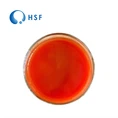
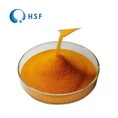
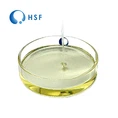
HSF Biotech Company CWD Coenzyme Q10
To enhance the bioavailability of Coenzyme Q10, it is important to select appropriate formulations based on different application needs, enabling better release and function within the body. Relying on our separation and extraction technology platform, HSF Biotech produces Coenzyme Q10 using cold water dispersion microencapsulation technology. This ensures stable performance, strict control over trace pollutants, and good flowability. It quickly disperses in cold water, making it suitable for various applications such as solid beverages, gummies, and premixes. It can be combined with vitamin E/plant oils and is widely used in functional foods and soft capsules, among other products.

HSF Biotech company not only improves the solubility of Coenzyme Q10 but also enhances its light stability and storage stability, achieving the goal of extending shelf life. In recent years, the development of water-soluble Coenzyme Q10 has paved the way for its better application in the food and beverage industry. Currently, the main forms of Coenzyme Q10 in the market are tablets, capsules, and softgel formulations used in dietary supplements and food products. These formulations may consist of Coenzyme Q10 alone or combined with other ingredients such as vitamin E, fish oil, organic flaxseed oil, or vitamin D. The addition of other ingredients can promote the absorption or synergistic effect of Coenzyme Q10.
Want to get FREE SAMPLES, please contact our specialists at sales@healthfulbio.com.