



MCT oil, also known as medium-chain triglycerides, is a concentrate of MCTs from many sources, while coconut oil is one of the few vegetable sources of saturated fatty acids, rich in medium-chain fatty acids and lauric acid.
MCT Oil
MCT oil is mainly derived from coconut oil, palm kernel oil, breast milk, milk, etc. In nutrition and biochemistry, medium-chain fatty acids (MCFA) are defined as saturated fatty acids containing 8 to 12 carbon atoms, mainly referring to caprylic acid (C8) and capric acid (C10). In organic chemistry, it is defined as a saturated fatty acid containing 6 to 12 carbon atoms. MCFAs are present in daily food intake in the form of medium-chain triglycerides (MCTs), which are triglycerides composed of medium-chain fatty acids, primarily caprylic and capric triglycerides.
MCT oil is a colorless and odorless liquid at room temperature, with low melting point and boiling point, low density and low viscosity, about 50% of ordinary vegetable oil. Due to the unique physicochemical properties of MCT, the digestion, absorption, transport and metabolism of MCT in vivo are different from those of LCT. MCTs are digested and metabolized in the body at the same rate as glucose, producing twice as much energy.
Coconut Oil
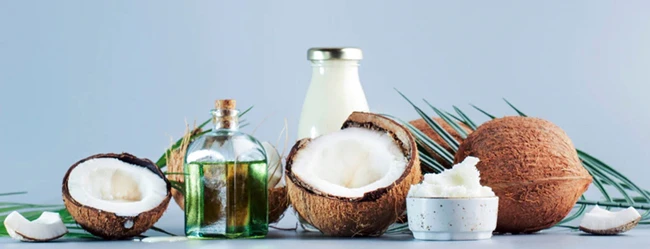
Coconut oil is rich in medium-chain fatty acids and lauric acid. Coconut oil differs from other vegetable oils in that it contains high amounts of MCTs, which are not metabolized in the body like other long-chain fatty acids.
Therefore, the MCT components in coconut oil can provide energy directly, producing very efficient energy, which is difficult to store in the form of fat.
Lauric acid has a good antibacterial effect and can improve immunity. It can reduce antibiotic resistance and reduce the risk of heart disease.
Another advantage of lauric acid is that it is especially good for the skin and has great skin care benefits. Many skin care products now also add coconut oil as an ingredient.