


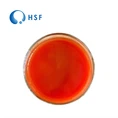

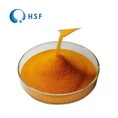
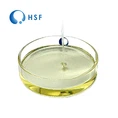
The development of natural pigments is the general trend in the world's food colorant industry. Although China is currently in a state of coexistence and simultaneous development of synthetic and natural pigments, the development and promotion of natural pigments is also a major direction for the development of food colorants in our country. Compared with synthetic pigments, natural pigments mostly come from animal and plant tissues, generally showing higher safety for human consumption. Some natural pigments are themselves nutrients and have nutritional effects, while others have certain pharmacological effects. Meanwhile, natural pigments can better imitate the colors of natural substances, and the color tone when coloring is more natural. Therefore, the development of functional natural pigments with certain nutritional or pharmacological value is of great importance to the development of the pigment industry.

Lycopene
Lycopene is a type of carotenoid that is found in the fruits of various plants, such as tomatoes, carrots, watermelons, grapes, and pink grapefruits. Tomatoes have the highest concentration of lycopene and were the first source from which this pigment was isolated, hence its name.
Lycopene crystals are long, red needles that are insoluble in water but slightly soluble in polar organic solvents, such as methanol. They are soluble in ether, petroleum ether, hexane, acetone, and easily soluble in chloroform, carbon disulfide, benzene, and fats. Lycopene is a lipophilic unsaturated hydrocarbon compound with 11 conjugated double bonds and 2 non-conjugated double bonds. Its molecular formula is C40H56, and its relative molecular mass is 536.85. The melting point of lycopene ranges between 172 to 175°C.
Natural lycopene is sensitive to light and can be stored in the dark for 8 days, but it is very unstable in sunlight. It is also unstable in organic acid solutions with a pH of less than 6, and its stability decreases as the acidity increases. When mixed with alkaline solutions or acetone solutions, lycopene immediately becomes turbid. High-valent metal ions such as Fe3+ and Cu2+ cause significant lycopene loss, so containers made of iron or copper are not suitable for lycopene storage. Lycopene is relatively stable to heat and can withstand ions such as K+, Na+, Mg2+, Fe2+, and others.
Lycopene Physiological Functions
Due to the unique molecular structure of lycopene, it has been found to possess the following physiological functions:
- Antioxidant activity: Lycopene exhibits the strongest antioxidant activity among carotenoids. Its ability to scavenge singlet oxygen is 100 times higher than that of commonly used antioxidant vitamin E and more than twice that of beta-carotene. It is therefore referred to as an effective biological antioxidant and singlet oxygen quencher.
- Anti-cancer activity: Experimental evidence suggests that lycopene has preventive and inhibitory effects on malignant tumors.
- Enhancement of immune function: Lycopene can improve the body's immune system and enhance immune response.
- Hypolipidemic and anti-atherosclerosis effects: Lycopene has the ability to inhibit the oxidation of low-density lipoprotein (LDL) particles, which play a significant role in the development of atherosclerosis.
- Skin protection and delay of aging: Lycopene is known to protect the skin and delay the aging process.

Zeaxanthin
Zeaxanthin is a natural oil-soluble pigment belonging to the carotenoid family. Its molecular formula is C40H56O2 and it is classified as a dihydroxy derivative of β-carotene. Zeaxanthin coexists with other carotenoids such as lutein, beta-carotene, and violaxanthin, forming a mixture known as mixed carotenoids. It is a novel type of natural pigment and widely found in green leafy vegetables, flowers, fruits, goji berries, and yellow corn in nature. Apart from plants, zeaxanthin is also produced by cyanobacteria (cyanobacteria) and some non-photosynthetic bacteria like Mycobacterium, Erwinia, and Flavobacterium.
Zeaxanthin is a lipophilic compound and soluble in organic solvents. It exhibits poor stability towards Fe3+ and Al3+, but relatively stable towards other ions, acids, bases, and reducing agents like Na2SO3. However, it has low stability under light and heat, with light exposure having the greatest impact on zeaxanthin stability.
Zeaxanthin Physiological Functions
In the human body, zeaxanthin functions as a potent antioxidant, capable of quenching singlet oxygen and scavenging free radicals, thus protecting tissues and cells from potential harmful effects of excessive oxidative reactions.
- Anti-cancer effect: Similar to many other carotenoids, zeaxanthin can counteract the damage caused by free radicals in the body, thereby exerting an anti-cancer effect.
- Prevention of cardiovascular diseases: Zeaxanthin significantly reduces the incidence of myocardial infarction.
- Prevention of cataracts: Zeaxanthin, one of only two carotenoids found in the crystalline lens, can quench singlet oxygen and indirectly reduce the degradation of lens proteins, thus preventing cataract formation.
- Prevention of age-related macular degeneration: Zeaxanthin also plays a role in preventing this condition.
Furthermore, zeaxanthin itself has high nutritional value. When consumed, it can be converted into biologically active vitamin A in the liver, promoting growth and development, protecting vision and epithelial cells, enhancing immunity, and prolonging life.

Curcumin
Curcumin, also known as turmeric yellow, is mainly derived from the rhizomes of plants in the ginger family, Curcuma. In fact, it consists of three compounds with slightly different molecular structures: curcumin, demethoxycurcumin, and bisdemethoxycurcumin. It is an extremely rare diketone-colored substance in nature. Curcumin is soluble in methanol, ethanol, alkalis, and acetic acid at low temperatures, but sparingly soluble in water, benzene, and ether. It is unstable in aqueous solutions. In acidic and neutral solutions, it appears yellow, while in alkaline solutions with a pH greater than 9.0, it appears red. Due to the presence of multiple double bonds, phenolic hydroxyl groups, and carbonyl groups in the curcumin molecule, it exhibits strong chemical reactivity. Metal ions such as Al3+, Fe3+, and Cu2+ as well as intense light and high temperatures can affect the stability of curcumin. However, the influence of substances such as sucrose, starch, Na+, Cl-, and Zn2+ ions on the pigment is minimal.
Curcumin Physiological Functions
Curcumin has various physiological functions that are being gradually recognized and studied. These include:
- Anti-tumor effects: Curcumin can eliminate free radicals, reduce the production of peroxides, inhibit the generation of metabolites of arachidonic acid, and suppress the expression of cancer cells.
- Antioxidant effects: Curcumin can inhibit the oxidation of lipids by air, Fe2+, and Cu2+, inhibit the nitrite-induced oxidation of hemoglobin, and prevent DNA oxidative damage.
- Anti-mutagenic effects: Curcumin can metabolize mutagens and indirectly inhibit the metabolism of mutagens.
- Hypolipidemic and anti-atherosclerotic effects: Curcumin can inhibit the oxidative modification of low-density lipoprotein in cells.
In addition, curcumin also possesses multiple physiological functions such as promoting blood circulation, regulating qi flow, anti-inflammatory properties, anticoagulation, anti-infection, and prevention of age spots formation.

HSF Biotech Natural Colors
HSF Biotech is a leading producer of natural pigments, including fermented lycopene, beta-carotene, zeaxanthin from corn, and curcumin from turmeric. These natural pigments are widely used in the food industry as safe and non-toxic additives.
One of the major advantages of using natural pigments is their safety profile. As they are derived from natural sources, they do not pose any health risks compared to synthetic food colorants. HSF Biotech ensures that their production processes adhere to strict quality standards, guaranteeing the safety and purity of their natural pigments.
Natural pigments offer multiple physiological benefits. Lycopene, for example, is known for its antioxidant properties and potential anti-cancer effects. Beta-cartene, found in carrots, is essential for vitamin A synthesis and supports eye health. Zeaxanthin, derived from corn, acts as a protective nutrient for ocular health. Curcumin, obtained from turmeric, possesses anti-inflammatory and antioxidant properties.
Apart from their health benefits, the economic value and social benefits of natural pigments are immense. With their low cost and abundant availability of raw materials, natural pigments offer a cost-effective solution for the food industry. Additionally, the demand for natural, nutritious, and multifunctional food additives aligns with the future development direction of food additives. By incorporating natural pigments, HSF Biotech contributes to the production of safer and more appealing food products.
HSF Biotech's production of natural pigments such as fermented lycopene, beta-carotene, zeaxanthin from corn, and curcumin from turmeric offers significant economic value and social benefits. These natural pigments are safe, non-toxic, and provide various physiological functions. Their utilization in the food industry promotes the development of natural, nutritious, and multifunctional food additives, meeting the demands of consumers and ensuring a healthier food supply.

Want to get FREE SAMPLES, please contact our specialists at sales@healthfulbio.com.