


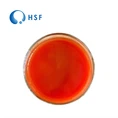

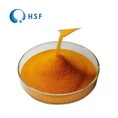
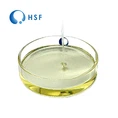
Lycopene, a carotenoid pigment responsible, is renowned for its exceptional antioxidant properties. As a powerful scavenger of free radicals, it offers comprehensive protection against oxidative stress, thereby promoting overall well-being.

There are two ways to produce lycopene. Compared with extracted lycopene, fermented lycopene has the following significant advantages:
1. Improved bioavailability
Advantages of fermentation process: Fermentation process can significantly improve the bioavailability of lycopene. Through the action of microorganisms, the structure of lycopene may change, such as producing more cis-isomers, which are more easily absorbed and utilized by the human body. Other beneficial components may also be produced during the fermentation process, such as lactic acid, tyrosine, etc., which further enhance the health-care effects of lycopene.
Extraction process limitations: Although the traditional extraction process can obtain lycopene, its bioavailability is relatively low due to its molecular structure and existence state. In particular, all-trans lycopene has low absorption and conversion efficiency in the human body.
2. Production cost and efficiency
Fermentation process: Fermentation process usually has the characteristics of relatively low cost and short production cycle. Microbial fermentation can be carried out under milder conditions and does not require complex equipment and excessive energy consumption. In addition, the fermentation process can also achieve continuous production and improve production efficiency.
Extraction process: Traditional extraction processes, such as solvent extraction, supercritical CO2 extraction, etc., often require high equipment investment, long production cycles and complex operating procedures. This increases production costs and may limit its use in mass production.
3. Product quality and safety
Fermentation process: Lycopene obtained through microbial fermentation usually has high purity and safety. The metabolic activity of microorganisms during the fermentation process can remove some impurities and harmful substances in the raw materials while retaining beneficial ingredients. In addition, the fermentation process can avoid safety issues such as solvent residues.
Extraction process: Traditional extraction processes may have certain limitations in removing impurities and harmful substances. Especially for solvent extraction methods, there may be a risk of solvent residue, affecting product quality and safety.
4. Environmental protection and sustainability
Fermentation process: Fermentation process is generally more environmentally friendly and sustainable. Microbial fermentation produces less waste, and part of the waste can be reused as fertilizer or feed. In addition, the fermentation process can also use renewable resources such as agricultural product processing by-products as raw materials, reducing the pressure on the environment.
Extraction process: The traditional extraction process may have great environmental pressure in terms of raw material utilization, energy consumption and waste disposal. In particular, chemical methods such as solvent extraction may cause certain pollution to the environment.
In summary, fermented lycopene shows obvious advantages in terms of bioavailability, production cost and efficiency, product quality and safety, environmental protection and sustainability. However, the specific choice of which process needs to be comprehensively considered based on production needs, equipment conditions, market conditions and other factors.

HSF's Fermentation Lycopene
HSF Biotech is the ISO22000 Qualified Manufacturer for Natural Color Products. Our lycopene is obtained from Blakeslea trispora through the fermentation phase using the two sexual mating types of the fungus in specific proportions, and the extraction and recovery phase involving solvent extraction.
HSF Lycopene Powder is a kind of red to brownish-red crystalline powder based on the fermentation of Blakeslea trispora. The product can be used as a colorant and dietary supplement in functional food, cosmetics, etc.
Application Fields
Our lycopene powder is versatile and can be used in various industries, including pharmaceuticals, nutraceuticals, cosmetics, and food and beverage.
Food industry: Lycopene is widely used in various foods, such as beverages, baked goods, meat products, and condiments, due to its bright color and unique taste. It can increase the nutritional value and health function of the product while improving the market competitiveness of the product.
Health products: Lycopene is widely used in the field of health products due to its powerful antioxidant and health functions. Many health product companies use it as the main ingredient to produce various foods with health functions such as lycopene soft capsules, lycopene tablets, etc.

Medical field: Lycopene also has a certain application value in the medical field. Studies have shown that it has multiple pharmacological effects such as antioxidant and anti-inflammatory effects, which have certain therapeutic effects on the prevention and treatment of certain diseases. Therefore, it is also used to prepare some pharmaceutical preparations such as antioxidants, anti-inflammatory drugs, etc.
For more details, please contact us:
Email: sales@healthfulbio.com
Whatsapp: +86 18992720900