


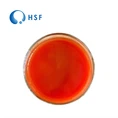

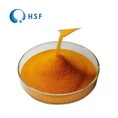
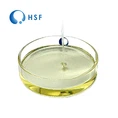
DHA algae oil is extracted from algae plants. Domestic and foreign scholars have conducted a number of toxicological tests and demonstrations on it. The test results show that it is safe to add a specified dose of DHA to food.
Most people think that fish is the main source of DHA. The fact is that fish contain DHA because they eat seaweed rich in DHA, and the DHA in the seaweed is accumulated in the fish body through the food chain. Therefore, taking algae DHA directly is not only more direct, but also does not have the fishy smell of fish oil.

The difference between fish oil and algae oil DHA
Fish oil DHA: mainly extracted from deep-sea fish oil.
Features:
1. Although the DHA content of fish oil is relatively high, the EPA content is also relatively high, which has an adverse effect on the production of ARA in children.
2. The content of EPA (eicosapentaenoic acid) is high, which makes the proportion of DHA too low, which is quite different from breast milk and does not meet the physiological needs of children.
3. Fish will be contaminated to varying degrees by heavy metals such as mercury and lead or harmful substances such as arsenic, and the safety is low.
4. DHA extracted from deep-sea fish oil is beneficial to the elderly and adults, because EPA has the effect of lowering blood lipids and diluting blood.
Algae DHA: It is extracted from algae.
Features:
1. Algae DHA content is high and EPA content is extremely low. If DHA is extracted from algae, the ratio of DHA to EPA is 20:1, and if it is extracted from fish oil, it is 4-5:1.
2. Algae extraction is pure natural plant, has no fishy smell, and has strong antioxidant capacity. If it is extracted from deep-sea fish oil, its properties are relatively active, and it is easy to oxidize and become fishy.
3. DHA extracted from algae is most conducive to the absorption of infants and young children, and can effectively promote the development of the baby's retina.
From the characteristics of the two, it can be seen that fish oil DHA and algae oil DHA are different in raw material sources and DHA content. Compared with before, algae oil DHA is a pure plant source, which is purer and safer, and the purity of DHA contained is also higher than that of fish DHA products.

Application of DHA algae oil in food
Infant and children's food
DHA is essential for the formation and development of infant brain cells and visual organs, and is very helpful for children's brain thinking and memory formation. Many countries, including my country, have approved DHA algae oil for use in infant and children's food production.
In developed countries such as Europe, the United States, and Japan, infant formula liquid milk, milk powder, cheese, soft candy, biscuits and other products are on the market. Domestic well-known dairy product manufacturers such as Yili and Mengniu have also launched infant formula milk powder and children's liquid dairy products with algae oil DHA in recent years.
It is worth noting that in order to ensure the safety of infant food, when selecting microcapsule DHA products as nutritional supplements, attention should be paid to the types of raw materials such as wall materials and emulsifiers, which should meet the special requirements of infant food for raw materials.
Adult food
Mix the microcapsule DHA algae oil with flour, starch, and milk powder first, then mix and mix with water and other raw materials, and then produce according to the subsequent process of ordinary biscuits.
The addition of algae oil DHA to cakes was tested and studied, which maintained the function of DHA without affecting the quality of the cakes.
The addition of DHA algae oil to mooncake crusts was explored. DHA oil was dissolved in peanut oil and then mixed with other raw materials to make crusts. DHA powder was directly added to flour and dry mixed to make crusts to achieve the purpose of strengthening DHA.
DHA oil was added to mooncake fillings. The dispersibility of algae oil DHA oil in mooncake fillings was better than that of powder, which was suitable for industrial production.
DHA algae oil and microcapsule powder were added to toast bread respectively. When the net amount of DHA added was 0.10-2.20 mg/g, the additive had no significant effect on the appearance, flavor, taste, acidity and peroxide value of toast bread within the 7-day shelf life, and the DHA loss rate of powder was lower.

Oils and Fats
Add high-content DHA algae oil to peanut oil and olive oil, and study the shelf life and DHA stability of vegetable oils added with DHA algae oil under low-temperature and high-temperature cooking conditions. The DHA content of the samples remained basically unchanged under low-temperature cooking conditions below 100°C. After high-temperature cooking at 160°C for 20 minutes, the DHA content decreased slightly, but the decrease was not large, and it did not have a major impact on the smell and taste of peanut oil.
Oral preparations
DHA algae oil oral preparations mainly include powdered preparations and soft capsules, with soft capsules being the majority, and both are sold as health products.
Powdered preparations are generally produced using microcapsule encapsulation technology, while soft capsules are generally made by directly filling microalgae DHA oil.
These two types of products are mostly compound nutrient preparations, and powdered preparations are mostly added with milk powder, functional sweeteners, and trace elements such as calcium and zinc. Soft capsules are mostly added with oils rich in unsaturated fatty acids such as walnut oil and linolenic acid oil, as well as oil-soluble nutrients such as vitamin E.
The main users of the product are pregnant women, postpartum women, infants, children and the elderly.

Future development of DHA algae oil
As a new resource food, DHA algae oil has its own unique nutritional value, physiological functions and high safety.
With the promotion and application of new cultivation, extraction and separation technologies such as microalgae co-cultivation technology, supercritical extraction technology and molecular distillation, its production safety can be better guaranteed.
With the continuous development and improvement of DHA algae oil application technology, its solubility and stability have also been significantly improved.
The improvement of the above conditions has greatly increased the application space of DHA algae oil in food. As a nutritional enhancer, it can be appropriately added to beverages, dairy products, baked foods, grain and oil products and their deep-processed foods to develop functional foods for adults.
In addition, it can also be reasonably added to infant and young children's supplementary foods and children's foods such as milk powder, rice flour, biscuits, noodles, liquid milk, yogurt, fruit and vegetable juice (sauce), compound paste foods, and candies.
HSF's Algae Oil DHA
The HSF R&D team has been deeply engaged in the production strain breeding strategy, high-yield strain breeding, and optimization technology in the development and cooperation for ten years, and has accumulated fermentation technology experience and production experience. With the help of modern biotechnology, information technology, and engineering equipment, the team has achieved multi-link optimization and reconstruction in the fermentation research methods and fermentation processes and gradually solved the problem of DHA algae oil industrialization.

For more details, please contact us:
Email: sales@healthfulbio.com
Whatsapp: +86 18992720900